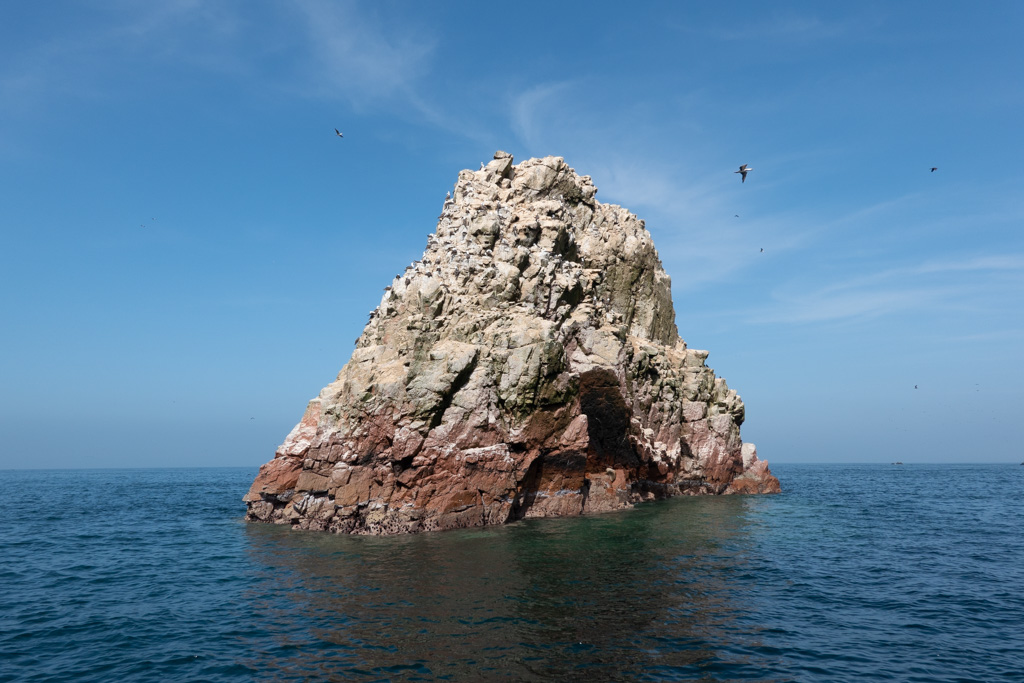
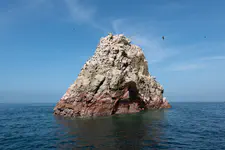
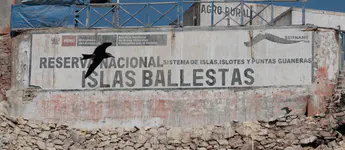
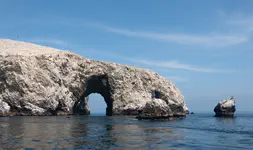
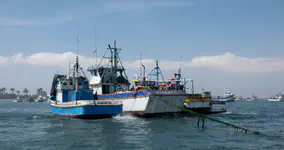
Islas BallestasThe bus we’re taking, “Peru Hop,” stops first in the town of Paracas a
few hours south of Lima. There’s not a whole lot there, a couple of
fancy beach resorts, a main strip of restaurants for tourists, and a
couple of low and mid-range hotels. Peru Hop promotes a trip out to
the Ballestas Islands, a two hour boat tour to islands that are
sometimes called “the poor man’s Galapagos” and are primarily known as
a source of guano. I didn’t put much stock in the “Galapagos”
comparison, but it sounded interesting and it might be a good chance
to see some interesting birds. Plus it was cheap, only 50 soles per
person - about US $15 for us in 2018.
We had a great time. I was too skeptical.
Cactus geoglyph
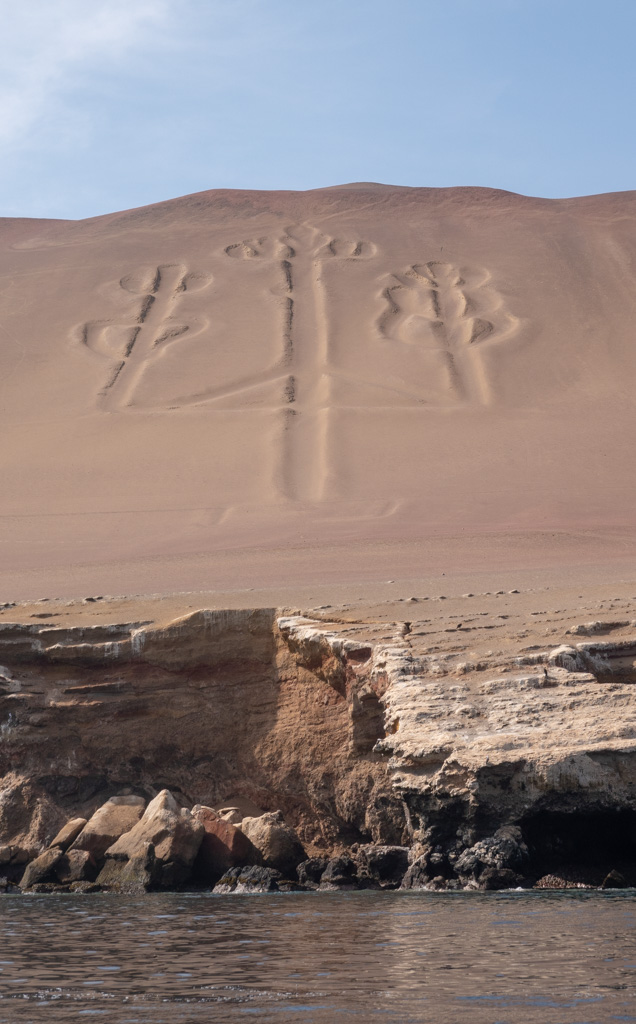
Cactus geoglyphOn the way out you pass a geoglyph that dates back to the Paracas
culture. This culture predates the more famous Nazca culture and dates
back at least 2000 years. The geoglyph is a large carving of a cactus,
easily visible from the water and probably of ceremonial
significance. It’s lasted over 2000 years and seems to be pretty well
preserved. I wonder what we’ve built that will last 2000 years…
The islands
Penguins
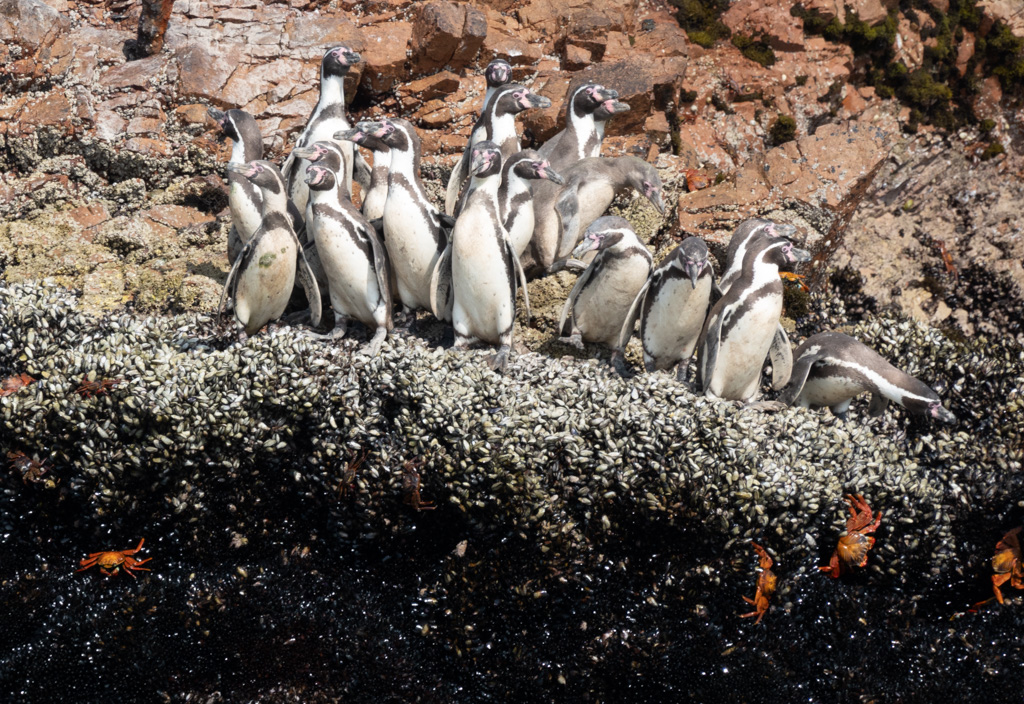
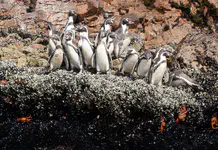
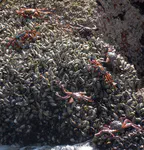
Humboldt penguinsThe first thing we saw as we approached the islands, was a curious sea
lion in the water watching us. They’re very cute even if they are
ruthless predators. Next we saw a small flock of Humbolt penguins
trying to enter the water. They’re even cuter. The were perched on a
ledge covered with mussels and big red crabs trying to figure out how
to get into the water (and being put off by the noisy boat I’m
afraid.)
Sea lions and seals
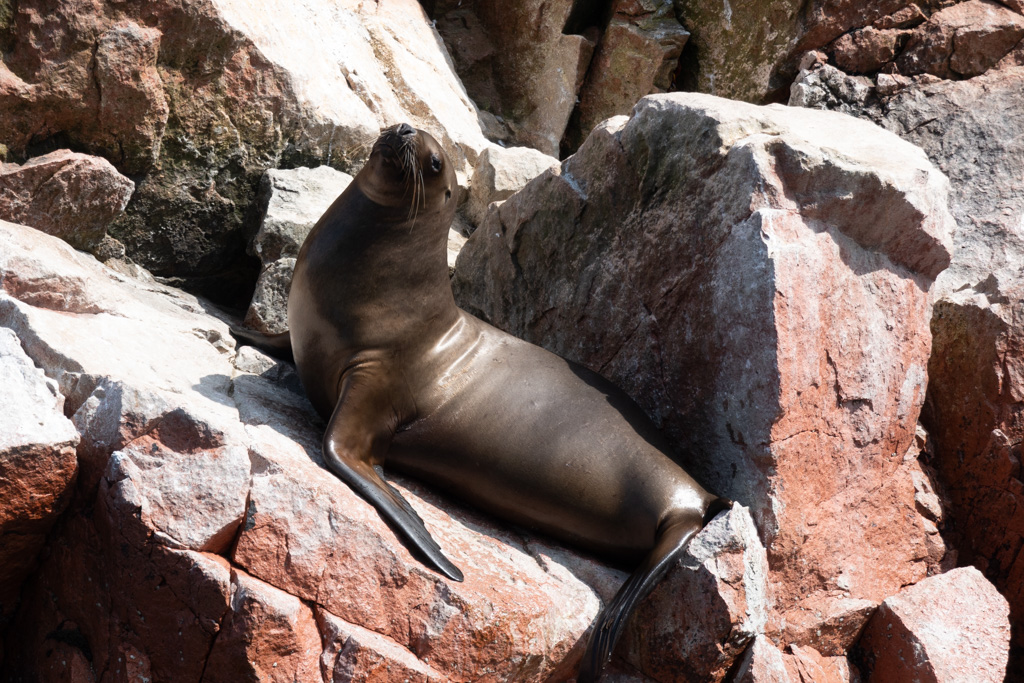
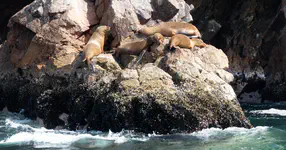
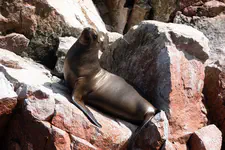
Sea lionThere are two kinds of seals living on the islands, fur seals, and sea
lions. We mostly saw sea lions. They were basking on the rocks,
climbing up out of the water, swimming around looking at us, and
trying to catch the big red crabs. Pretty darn cute, they seemed to
sit on the rocks in a deliberate “look at me, aren’t I cute?” pose.
Other birds
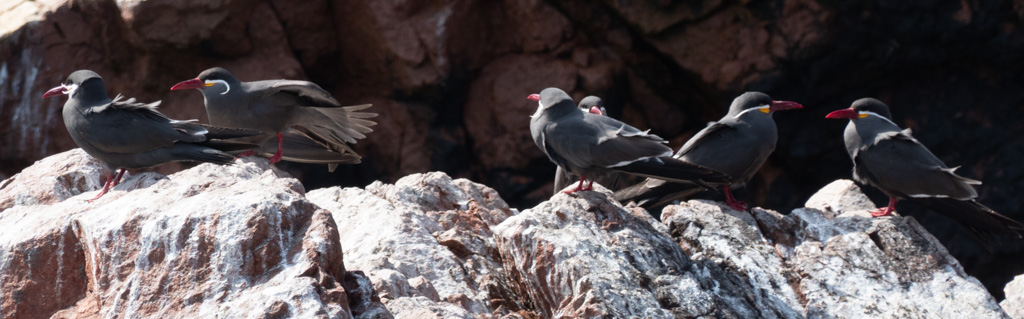
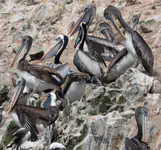
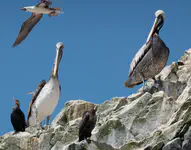
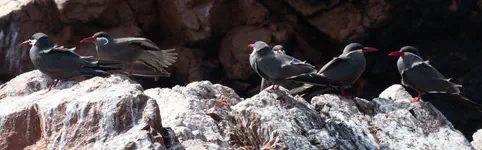
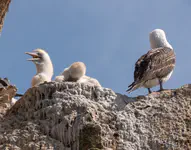
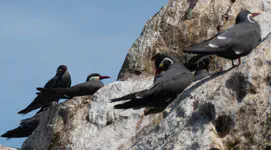
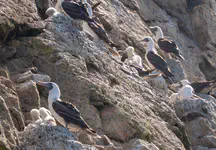
Inca TernThe are also Peruvian boobies (Sula variegata, “piquero”), Peruvian
pelicans (Pelecanus thagus), Inca terns (Larosterna inca, “zarcillo”),
and Guanay cormorants (Leucocarbo bougainvillii, “guanay”). The
boobies were raising babies, and the cormorants were nesting so we got
to see bird babies! Sadly boobie babies are not as cute as penguins.
Guano
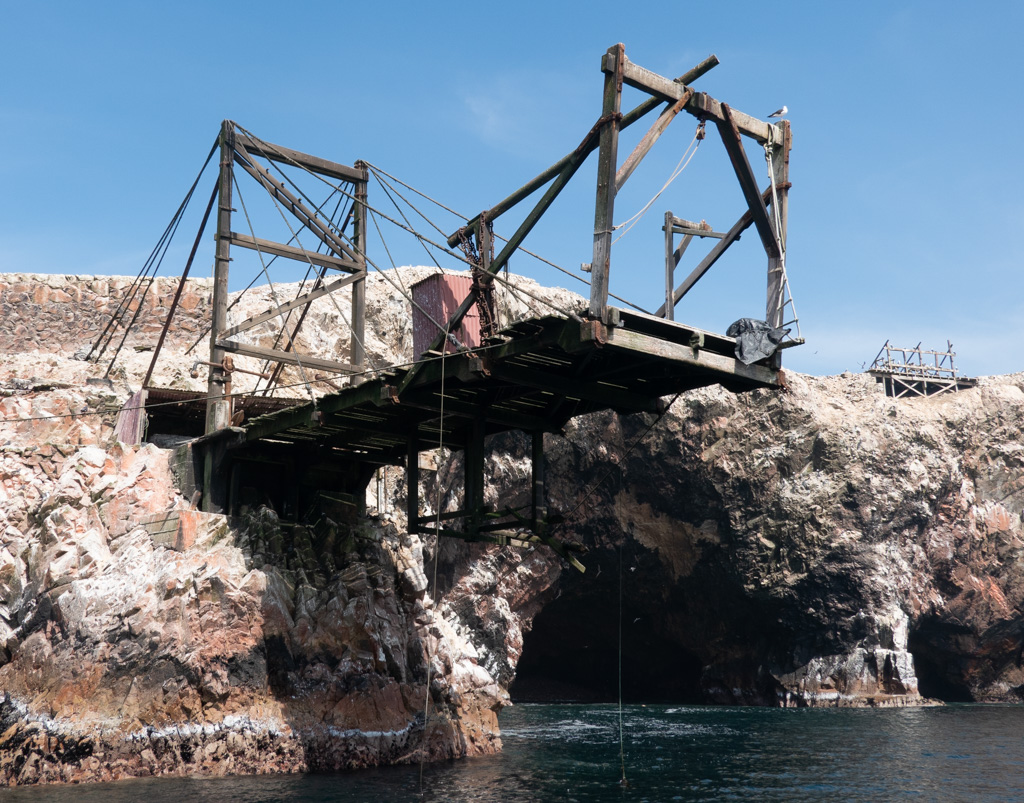
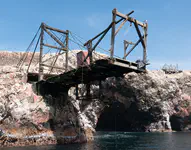
Guano dockThese islands were once covered in guano several meters deep. Mostly
produced by the guanay cormorants and the peruvian boobies the guano
was basically strip mined and produced huge income for Peru and
Chile. To the point where Chile started a war and seized the guano
resources of Bolivia and Peru. Did you know Bolivia once had a coast?
But I digress. Afterwards these islands were used sustainably to
produce guano for Peruvian farmers. Unfortunately due to overfishing
and the ongoing collapse of the Pacific fishery, the guano production
also collapsed. At this point they harvest maybe 60 cm of guano off of
the tops of these islands every 5-8 years. Still 10 cm of new guano
per year covering these islands is a pretty impressive pile of bird
shit.
In conclusion
I’m glad we went, we got to see a lot of fauna up close, it didn’t
smell as bad as I’d feared, and it was well worth the time and minimal
expense.