Below you will find pages that utilize the taxonomy term “Lima”
Postsread more
Panaderías and Pastelarias
Lima has an active bakery scene both pastelarias or pastry shops, and panaderías which are bread shops. There’s a standard repertoire that includes alfajores de manjar, a sandwich cookie made from cornstarch and filled with manjar (dulce de leche) caramelized sweetened milk.) The cookie came to Peru from Spain, and came to Spain from al-Andalus. The name comes from the arabic الفاخر, al- fakher. But I digress. There are also tarts, cakes, and pies. The panaderias generally sell a francese roll which is a simple white bread divided in two, a sweet pan de yema which is a soft egg bread, and various baguettes and loaves. There were a few standouts, and one amazing bakery that I saved for last.
Postsread more
Cosme
The place
Cosme is one of the “new, trendy, hip” places on all the Lima food lists. It emphasizes sustainability and is decor is reused, repurposed, and recycled. The ceiling is decorated with disposable soft drink bottles filled with brightly colored water. The walls are decorated with soda bottle caps. The restaurant’s mascot is the local vulture, while not known for its looks it’s an essential part of the ecosystem, scavenging and cleaning up after others.
Postsread more
Costanera 700
The place
Costanera 700 is one of the oldest Nikkei (Japanese Peruvian) restaurants in Lima. It was founded by nissei Humberto Sato (who passed away in October at 78) and is now run by his son Yaquir Sato. This place is a Lima institution, beloved for over 30 years by politicians, business people, and the artistic elite. The decor reflects both its age and its eclectic history, it’s kitchy and a bit dated but charming none the less. The clientele? In Yaquir’s words (translated) “Now many entrepreneurs come to close deals, especially at lunch time, the average customer is over 40 years old and most of them are male, while 30% come from another country.”
Postsread more
El Mercado
The place
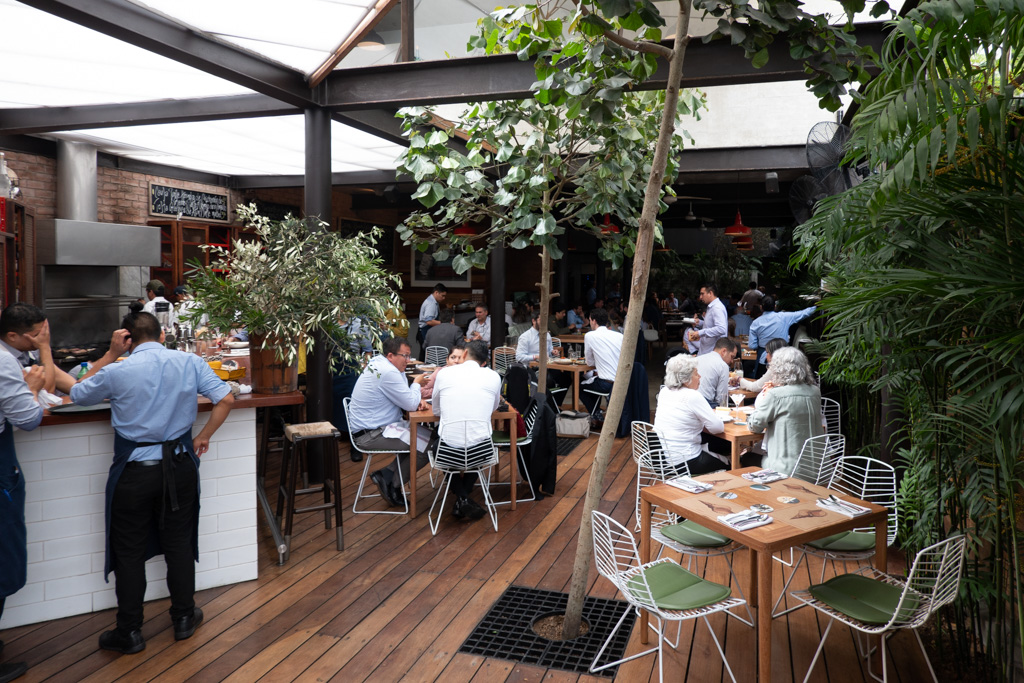
El Mercado is a fancy fish oriented restaurant by Rafael Osterling (the chef/owner of Rafael.) It has a reputation as the best cevicheria in Lima and it regularly makes the lists of the best restaurants in Peru. Sounded like our kind of place.
Postsread more
Malabar
The place
Malabar is one of Lima’s “nice” restaurants. Business people, tourists, people with money, in the financial district. Doing creative things with sustainable Amazonian ingredients. We went because we’d heard good things about the food and ingredients but were a little suprised at the setting and ambience. This seems like a place to take clients.
But the menu is all about the ingredients. The owner Pedro Miguel Schiaffino also owns āmaZ, which also focuses on Peruvian Amazonian food, but Malabar uses those ingredients in the service of fine dining. The emphasis is on the ingredients, not flashy technique, but the technique is still there. The menu includes some interesting ferments both in the dishes and in the drinks. Kombucha with local herbs for example.
Postsread more
Manolo
Manolo is an old fashioned Lima caféteria (coffee shop) and churreria in the heart of Miraflores. It’s an institution, founded in 1968 and is a comforting favorite of families of all ages. You see grandparents who may have met there, and new families bringing their kids. There’s a huge menu of sandwiches, pastas, seafood, and desserts
The portions are big, the crema volteada (“turned over” cream, like a flan) nearly covered the plate. The meals are family sized because this is a family place. While there are tourists here, there are plenty of ordinary people enjoying an old favorite as well.
Postsread more
IK Restaurante
The restaurant
IK restaurant is one of the fancy “modern Peruvian” restaurants in Lima that is not part of the Gastón Acurio (Astrid & Gastón) and Virgilio Martínez Véliz (Central) axis. When we arrived our immediate impression was of understated and quiet elegance. IK has dimly lit stone and wood with patterned pools of light on each table. IK has windows onto the kitchen, which we like, and it appears that half of the chefs are women including the head chef (Francesca Ferreyros) which was a pleasant surprise.
Postsread more
La Mar
La Mar is one of the fanciest, and most expensive, fish places in Lima. La Mar is known for having a great selection of fresh fish, and for preparing it well. Since we wanted to get a good idea of how ceviche was supposed to be prepared, and because La Mar didn’t need bookings, we decided to go for lunch. When we got there, there was no wait at all which was a pleasant surprise. As we walked in we walked past a display of fresh whole fish on ice, which piqued our interest.
Postsread more
Kjolle
Kjolle is the sister restaurant to Central, the most famous restaurant in Lima. It’s the project of Pia León, co-chef and partner with Virgilio Martínez in Central. Despite being co-chef and partner, she usually doesn’t get as much credit. With Kjolle she will hopefully get the showcase she deserves.
It’s a more intimate space, light and airy, and a menu that includes both a la carte and a tasting menu. Apparently she was originally not going to offer a tasting menu at all but I’m glad she did. We got to try a lot more of her dishes. The techniques are impeccable but it feels more personal - the chefs come out to introduce some of the dishes and there’s less pomp and more personal attention. It felt friendlier and welcoming.
Postsread more
Panchita
Panchita is a criollo restaurant, it serves traditional creole Peruvian dishes. Those are typically “people’s” food derived from the food slaves and their descendants ate. There’s a classic repertoire, and it includes a lot of offal and offcuts. Panchita is a bit larger than your typical criollo place, a bit higher quality, but with a tiny bit less character than some of the smaller quirkier places. It’s good for getting an idea of how these dishes “ought” to be made before trying some more interesting places.
Postsread more
Central
Central is a high-end restaurant in Lima, well known for being on the San Pellegrino “Worlds 50 Best Restaurants” list. It’s supposed to be one of the most difficult reservations to get in Lima, but we managed by walking over during the day and asking at the front desk if they had anything open in the next two months. They found a lunch for us in the next week so off we went!
Postsread more
Astrid y Gastón
Astrid y Gastón is the third of the “Pellegrino Top 50” restaurants in Lima, and felt the friendliest and was the most “fun.” It’s in a magnificent colonial building, with a big garden out front filled with vegetables, herbs, and flowers attracting bees and birds. A lovely place to wander around.
Inside it’s much larger than you might think at first, with three separate kitchens (hot, cold, and pastry) and multiple rooms that can seat 200 people for dinner. Lunch is served in the blue room facing the hot kitchen, a bright airy space with hanging plants.
Postsread more
Maido
Maido is Lima’s most famous “Nikkei” style restaurant. Nikkei cuisine is the food of the Peruvian Japanese. Is 500 years long enough for food to stop being “fusion” and become its own thing? Peru has been home to Japanese and Chinese immigrants since the 1500’s and has embraced both cuisines and integrated them into Peruvian cuisine.
Maido is another one of the “Top 50 Restaurants” in Lima, and is just a few blocks from where we’re staying. It has a calm Japanese feel inside, and diners are greeted with a shouted “Maido!” as they enter. There is a traditional sushi bar and tables under a hanging forest of rope.